Categories
Getting started

Which class to enter?

Which class to enter?
You pick up your first schedule for a dog show and your new puppy is old enough, but what class should you enter? There are often hundreds of classes at an Open show and even more at a Championship show. but only a handful will be applicable to you and your dog.

If you enter online, then they will only give you the choice of classes you are eligible to enter but looking though a schedule can be daunting.

Breed/AVNSC classes
If your breed has separate classes, this is where you should make your first entry, otherwise you will need to enter Any Variety Not Separately Classified (AVNSC). There could be mixed sex classes or separate classes for dogs and bitches, so read carefully.
Enter the lowest class you can enter, so with a puppy, look for Puppy or Junior, if your starting to show an older dog, look for graduate or post graduate. The full definition of classes will be in the schedule or can be found on the Kennel Clubs Website from page 37 here.

Don’t get too excited and put a 6 months old puppy into a class where he could be up against older dogs. Also consider that you pay for the judge’s opinion, so if you want to do more than one class, look at the variety classes where it’s likely to be a different judge.

Variety and stakes classes
There will be variety or stakes classes for any breed of dog to enter at most shows. They are excellent practise for showing against other breeds. The classification of classes will be similar to that in the breed classes.
Categories
Getting started Show dog training

Show Etiquette

Show Etiquette
Etiquette: the customary code of polite behaviour in society or among members of a particular profession or group (Oxford dictionary)

There always seems to be discussions about the show world and a lot of people believe that those in the show world are “bitchy”, “nasty”, unkind” or “unhelpful”. I’m not going to defend everyone, some people are, but this is no means the majority, half or even a quarter. In fact, it’s a very small percentage.

But, still it is important to be reminded of show etiquette of polite behaviour towards each other while at shows and while discussing shows.

Remember to smile, speak to new people in the breed and encourage them. Share your tips (or at least share the Winning Paws blog!).
Congratulate the winners
Have a laugh with friends
Don’t say bad things about other people or dogs in public

I saw a lovely thing on Facebook yesterday where someone offered to make and give a lead to a 9 year old handler who wanted one. I saw lots of congratulations flying around the internet to people who had done well at shows.

Lets remember to keep the show etiquette and all play our parts in being friendly and approachable to keep this hobby fun and inviting.

I think most/all of us feel sad and guilty when a new person is made to feel unwelcome. After all, they didn’t meet anyone who has probably read to the end of this post.

Like if you agree!


Categories
Getting started products

Armbands or ringclips?

Armbands or ringclips?
At a show each dog will have a number allocated to them. This is their ring number and at benched shows will also be the bench number. Each dog has the number to identify it in the catalogue and in the judges book so it is important that the numbers are worn and displayed in the ring at all times.

In fact this is a Kennel Club rule (F, 17, i. Every exhibitor shall ensure that whilst the dog is being exhibited, its handler shall display the correct ring number.)

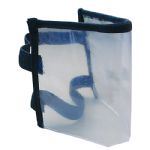
To display the ring number you can either use a specially designed clip, or an arm band.

There is no rule as to where your number should be displayed but it is helpful to both judge and steward if it is easily visible to them.

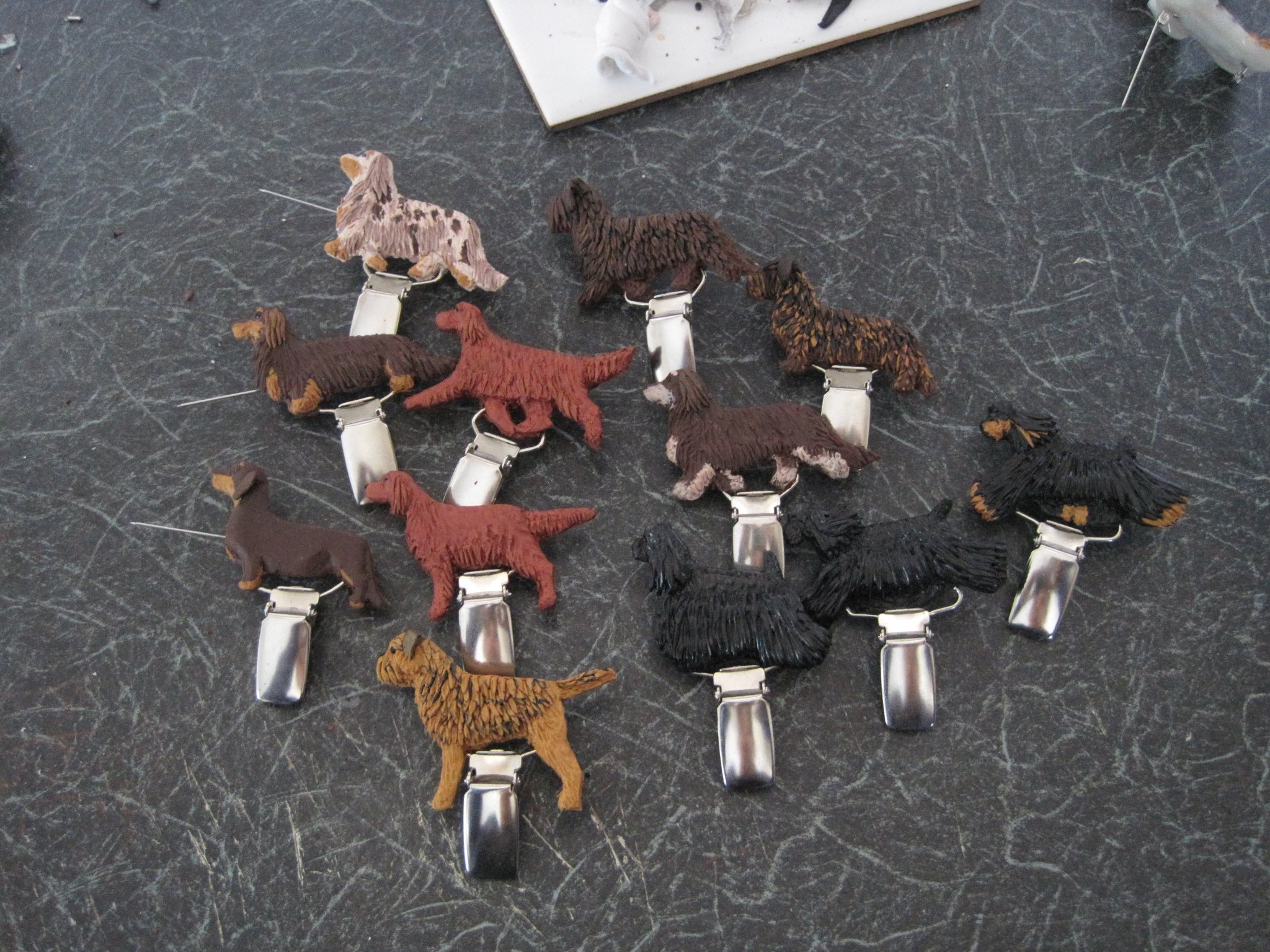
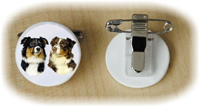
You have a large range to choose from for ringclips from 40p-60p basic clips (always worth having a few with your show kit) to handmade ones of your breed down to the detail of looking just like your dog. Armbands can range too with basic simple clear ones to sparkly, patterned ones which you insert the numbers into a pouch or just an elasticated band (with diamante of course!) . A type I haven’t yet used is the mixture of the two. The ringclip is on an elasticated arm band. They come in some lovely looking designs to match any outfit or lead.

Some different types for ring clips and arm bands can be found below:

Any breed or your own dogs photograph can be purchased from http://www.starprintshop.co.uk/
Found in most breeds in either silver or gold from http://www.k9centre.co.uk
My personal choice from http://www.rabartforfineart.com/
Handmade to order ringclips http://www.k9-kreations.co.uk or on Facebook http://www.facebook.com/K9kreationsuk
White armband from http://www.dogexhibitor.com
The great ‘spare’ for every show bag!

Edited on 01/10/12 to add a new style of Armband:
This is the style of an armband with a ringclip. As I wrote previously, this is a design I haven’t used but I can imagine it’s great for when changing your ring numbers over.

Armband clip design from Daisy Ann Dog Designs. Visit Daisy Ann Dog Designs on Facebook and look out for their online shop!


For cheap ringclips click here

Categories
Show dog training

Food vs Toys in the ring

Food vs Toys in the ring
One of the great things about showing over other dog competition sports,  is you can “cheat” and use anything you can (within reason) to get your dogs attention in the ring.

Treats I think are the common choice. Most dogs are food motivated and treats are a quick and calm way of rewarding your dog immediately as well as keeping their attention on you and used as bribery.

Toys are less used in the show ring, but are a keen training tool for non food motivated dogs and a popular training tool for those who have done/do agility/obedience it seems.

Toys can be harder. To show good sportsmanship, you do not want to distract other dogs in the ring. Therefore it is not a good idea to be squeaking squeaky toys, playing a game of tug or playing ‘catch’. However, the use of a toy as a lure is fine. Sometimes, a dog just knowing you have something they want can change the way they work for you, so feel free to take in a small toy that will fit in your pocket and then let your dog have a game after the class, away from the rings.

Remember when in the ring to consider your fellow exhibitors and show good sportsmanship at all times.

Categories
Getting started Show dog training

How do I get my dogs attention?

How do I get my dogs attention?
It’s a common question. Normally starts with “…at home they always respond, but they are too distracted at a show…”

Think about it, at home it’s just you and your dog and you have the treats, therefore, you are the person of highest value.

At a show, there are smells, other dogs, other people, other treats. The list goes on and it’s no wonder some dogs loose interest in their owner/handler.

Quite often you see this and there is the lacking bond between dog and owner/handler and where the dog lacks willingness to please it’s owner..

What can you do?
Short term, you need to be the most high value person/thing on the showground.  Using high value toys and treats will help.
Long term is more training. Get you and your dog on a one to one basis out to as many distracting areas and do some training. Not always show training, but tricks, basic obedience and have games. Ringcrafts can be great for also practice working on their attention while doing show ring training, likewise any training class you and your dog will enjoy together where there are many other distractions.

Case study
When Giles was younger he would easily get bored in the show ring if he was in a big class. As a pup he was used to classes of 2-3 and was always beaten by his sister, so never got a group experience either. So, when we came into bigger classes, his attention span would go. Standing around was boring!!!

My answer was simply to keep his attention. He loves to please, he loves his tricks too. In the ring I would ask for some quite and calm behaviors which he knew. His interest was back to me. A cuddle or two never went amiss either. This keeps his attention on me and by the time it’s his turn, well it’s just another behaviour I’m asking of him and he does it with a smile.

Categories
Getting started Handling training Show dog training

One must queue….correctly!

Standing in line
When in a class, everyone will be in a line/queue. Here are a few pointers to remember when you are standing in a line with all other handlers.

Firstly, work out where your dog prefers to be in the line and try to get to that position. Some dogs show better if they are first, others are better going last. In mixed breed classes, normally the table dogs go to the front. However, some judges will ask for the smaller dogs to be at the end of the line so always listen for instructions from either the judge or steward upon entry into the ring.

When standing your dog in the line always leave yourself room in front, approximately 2 meters. This is your escape route if the handler behind you crowds you. If you find yourself too crowded you have a number of options;

  • If they have room politely ask the handler behind to move back.
  • Move to the end of the line.
  • Ask the steward if they can move people back.

Always try to keep in line with the dogs in front of you.  If you stand back towards the edge of the ring you appear shy and reserved.

If you stand too far forward you will appear to be pushy and forcing yourself on the judge.

Also, avoid getting boxed into a corner where your dog could get obscured from the judge’s vision. In this instance, either start a new line or show your dog across the corner.

Wherever you are in the line, ensure your dog is stood when the judge is looking at him. Always keep one eye on the judge and one on the dog at all times, checking that you dog hasn’t moved and nor has the judge. You always want the judge to be seeing your dog at his very best.

Categories
Top Tips

Have confidence…

Have confidence…
When you go in to the ring, be with confident and think positive that you and your dog will work well together and enjoy it. This is likely to help you show and handle well in the ring.

We all have times when we have entered the ring thinking “The dogs’ going to play up” or “I don’t want to be here” and most likely come out saying, “He wouldn’t move” or “He’s being a right little monster”.

This is because your attitude will travel down the lead to the dog and they will pick up on it.

So remember, relax, have fun and enjoy each show,

Categories
Uncategorized

Blank/spare entry form

 Blank/spare entry form
Ever needed a spare, blank entry form for entering a second dog in a different partnership or because you can’t get hold of a schedule for a UK conformation show?

Well, in true Blue Peter fashion….Here’s one I made earlier…entry form (Excel) or Entry form (Word) or entry form (PDF)

Categories
Getting started

What to take to a show?

What to take to a show?
So what do you all pack for a show? Below are the top 10 general things to take and then top 10 things that make up the show bag.

What to put in the car
1)      Dog(s)
2)      Dog Water
3)      Water Bowel
4)      Your Water/drinks
5)      Your food
6)      Spare dog towels
7)      Rain coat (you and dogs!) or a cool coat for hot days!
8)      Show bag
9)      Spare dog lead
10)   Dog cage and cage plate for ring number (if used)

What’s in the show bag
1)      Show leads
2)      Poo bags
3)      Slobber  towel
4)      Arm band/ringclip
5)      Brushes/combs
6)      Bait/reward (could be a toy)
7)      Dry shampoo
8)      Towel
9)      Small or collapsible water bowel
10)    Benching chain

Leave a comment if you can think of anything else that you consider important to take to a show!

Categories
Top Tips

Top Tip #16

Top Tip #16
Always keep the lead neat. A dangly, untidy lead can distract the judges eye from the dog, and also can upset your dog, or make them want to chase it.