Categories
Handling training

Showing a dogs teeth in handling

Showing a dogs teeth in handling
In handling classes you will be asked to show the judge your dogs teeth.

The judge will access you on how well you show the teeth. To do this, show all three sides of the mouth clearly (two sides and the front). The order is not important (although some judges may think so) but either ‘side, side, front’ or ‘side, front, side’ appear to be the most common. The most important thing is how fluent you show them and how clear they are shown to the judge.

Be careful not to cover the dog’s nose or poke them in the eye with a finger when showing the teeth as this will invariably cause the dog to back away and will look messy.

Also, remember t think about where the judge is, especially how tall they are, and move your dogs head accordingly. It’s important when practicing with your dog to get them used to tilting their head up at different angles and also turning your dogs head with you show the sides.

Also remember that the judge wants to see the dogs teeth, not your head or hair, (a good reason for tying long hair back). If you can see your dogs teeth, the likelihood is, the judge can’t!

If the judge asks for the ‘bite’ this is when they want to just see the front teeth.  If you are ever unsure about what the judge wants then do ask them to clarify it  for you.

One last note; remember, a dog has 42 teeth!

Categories
Top Tips

Top Tip #33

Top Tip #33
Once your dog has learnt to stand, teach it to hold the position by regularly putting their legs into the correct position and getting them to hold the pose, starting with a short time and building up. The idea is your dog should never move, so don’t ask for too long, too soon.

Even with my large breed dogs, I like to practise this on the table, as well as the floor.

Don’t forget to always end on a high and ensure your dog gets a high value reward or game at the end.

Categories
Handling training Uncategorized

Handling with a cross breed

Handling has always been associated from the start with Pedigree/show dogs. Afterall, the art of handling classes has developed from skills used in the breed classes.

But, like everything, handling has developed in to a hobby and competition in it’s own right. The Adult Handling finals started being a seperate entity to any Kennl Club registered show and the YKC weekends host handling compeititions, along with the handling classes at Companion Dog Shows which sit under the novelty classes which are open to pedigree and cross breeds alike.

Though this we have seen an increase in handlers (junior and adult) competing in handling with cross breeds or non KC registered pedigrees.

The YKC allow handlers to compete with cross breeds at their training/activity weekends and have the chance to qualify for the YKC handling at Crufts.

When handling a cross breed there is no set way like with a pedigree, but most would advise you handle your dog to the breed it most resembles.

The same rules still apply, you want to move your dog at the correct speed and is stood so it’s “four-square”.

Categories
Handling training Judging Uncategorized

Anatomy (points of a dog)

Anatomy (points of a dog)
Every handler (junior or adult) will need to know the anatomy (points of a dog) when exhibiting in handling classes. There are many judges that will ask them! Below are the basic points of a dog which are the most common points (including number of teeth and ribs).

You can also find information on 40 points of the dog from the Kennel Club that are used for the conformation and movement hands on assessment for judges. It also has the front angulation, rear angulation and conventional measurements.


Categories
Product recommendations

Product recommendations: The Original Hi K9 Raised dog bed

Product recommendations: The Original Hi K9 Raised dog bed

Over the years I have tried many products for different things with my show dogs. Some have been a huge waste of money, others have just been fantastic which I use time and time again and I want to shout about! Save yourself the time and money of trial and error and find what really works.

This time it’s The Original Hi K9 raised dog bed which is made by The Original Hi-K9
What is it: Raised dog bed
Price: £25 – £65 (depending on size)
Where can it be purchased: Directly from The Original
Where did I purchase it from: The Original at Discover Dogs 2011
Star rating out of 5: ★★★★★
Winning Paws information: Every dog needs special care and deserves the full comfort between walks, feeding, runs, training and showing!

The Original Hi-K9 bed is loved by our dogs and myself! They are easy to clean, deter infestations and doesn’t hold smells.

A fabric top is suspended over a metal frame to create a comfortable place for dogs. The covers are changeable with loads of different colours to choose from so they will always match the furniture in the room!

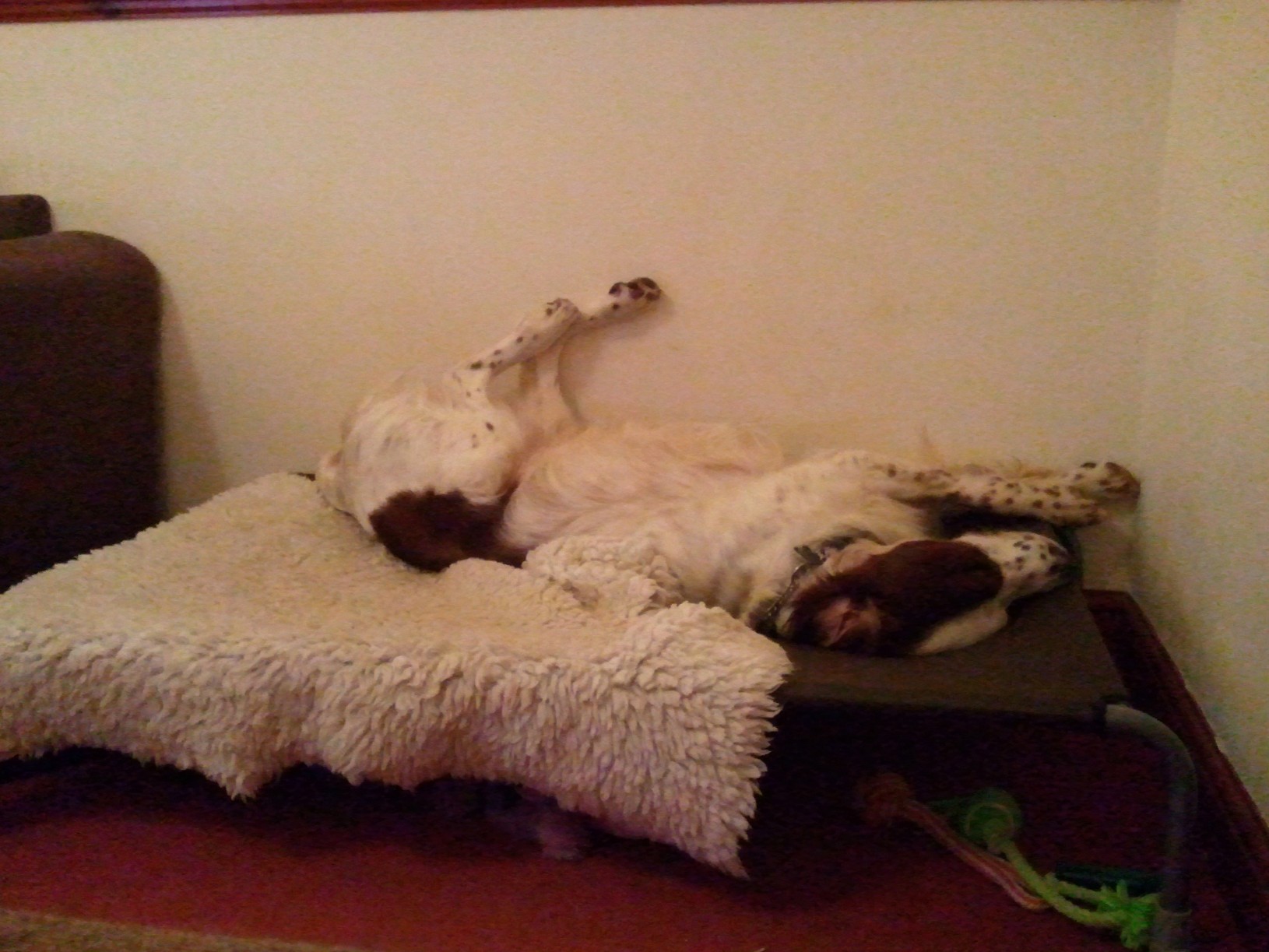
I personally have the mesh cover which allows easy breathing,  cleaning, no smells and all dirt drops though. In the winter we lay a vet bed on top but in the summer (or when the fire is on!) the dogs choose to use without.

The proof however is in the dog! Giles loves his bed and will happily choose his raised bed over the sofas! (Yippee!) And when any of the other Roanjora dogs come to visit, they soon find the comfort of the bed.

Now over a year old, it still looks like new. It just needs regular hovering underneath but it so light and easy to pick up this isn’t an issue.

To have a bed which supports the weight of the dogs and puts little pressure on the joints while proving to be comfortable and good value for money, what more does a dog need after a long day at a show?

I have recommended these beds to so many people already and everyone is satisfied…. Humans and dogs!

http://www.theoriginaluk.com

Categories
Getting started Show dog training

Space Perception – the science behind showing

Space Perception – the science behind showing

Handling a dog isn’t all glamour, there is some science behind it which I will try and explain one at a time.

“Spatial Perception is the ability to evaluate how things are arranged in space, and investigate their relations in the environment. Good spatial perception allows us to grasp the arrangement of our surroundings and our relationship to them. It keeps us from constantly colliding with the objects around us.”

Now, before you think I’m crazy, think about it. In a ring (normally square) there will be many things placed around the ring to be aware of including tables, other exhibitors and dogs, ringtape, stakes, and even flower arrangements, poles, spectators legs or drain covers.

It is important as a handler, you can quickly evaluate the space before moving, to miss any hazards which may hinder your dogs performance.

I have in the past seen many people run into tables, poles or other exhibitors for not looking where they are going, don’t let it be you! Stop, look and think where you can and can’t run in the ring!

Categories
Getting started Show dog training

Getting your dog used to being “gone over”

Getting your dog used to being “gone over”
If you want to start showing your dog, no matter what their age, you must get them used to having their body touched.

You can do this by regularly doing a “hands on” body feel of your dog. Take both hands and go over your dog from top to toe. Start from the head and feel your way down the body. Down the front legs onto the feet. Up to the shoulders and back and around the ribs. Continue down the body towards the tail. Stroke down the hind legs (back legs). Touch the tail and gently lift it or put it down depending on the breed. If you have a male it must get used to having its testicles felt.

Also get your dog used to being touched at any time, often judges will re-check shoulder placement or muscles before making a final decision.

Each time you put your hands on your dog, do it slightly differently, as no two judges will be exactly the same!

And don’t forget lots of treat and praise to make it a positive experience!

Categories
Top Tips

Top Tip #32

Top Tip #32
Join a committee of either your local canine society or breed club.

You will learn so much being on a committee and have the chance to see the world of showing from a different light.

Your help will also be appreciated by the club and it’s members.

Categories
Handling training Show dog training

Clever dogs, bad fault

Clever dogs, bad fault
A common problem I often see at ringcraft is dogs who start predicting the next movement. They may turn too soon on the triangle or turn and stop to present to the judge.

Try mixing up the training by changing orders of patterns, do different patterns and stop at different points.

Categories
Handling training Judging

Using mats

Using mats
Lots of open shows are still held in sports halls which have slippery surfaces. The society will supply matting to stop dogs slipping, so why do judges want and expect handlers to move their dog off the mat?

For the safety of your dog, please, always use the mats available where possible and if, for any reason, you don’t use the mats, please be careful with your dog that they don’t slip.

To judges: Please consider handlers and their dogs when judging and consider the mats your have in your ring. Do not expect handlers to put their dogs at risk and although smallr dogs may be ok, a fast moving dog may not be.