Categories
Handling training Show dog training

Don’t let your dog train you!

Don’t let your dog train you!
Dogs are intelligent animals and no doubt outsmart their owners at times! I thought I would share my story where Giles trained me back in 2010, hopefully you can learn by my mistake!

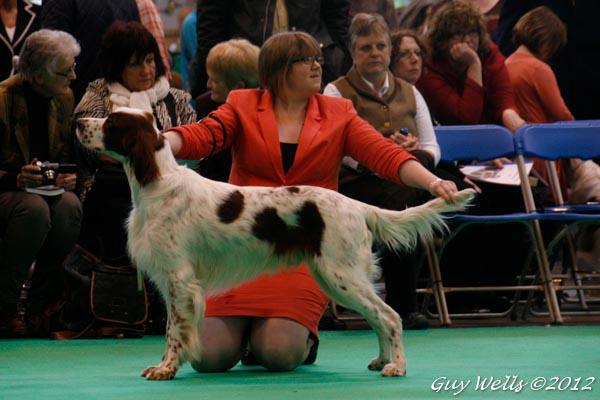
Being an Irish Red and White setter, we have numerically small classes. When he came out there were two other dog puppies and a larger number of bitches. At champ shows he generally only had 2-3 in his class and open shows varied between 2-8. He was always beaten by his sister so never got a best puppy in breed and group experience.

When he was about 18 months he took his first BOB and had his first group and his first large class of about 25! During this time he got bored, sat down and wouldn’t move in the line! So I made my first mistake, I lured him with a treat and then gave it to him, so again he sat down, refused to move, I lured with a treat and gave it to him and this went on a few times. You can see where this went. If he Sat and refused to move, he got a treat!!!!!

I have since then given myself a serious telling off as nearly two years on, he still tries it on, although now I don’t get the treats out, I just gently remind him we are moving!

I have learnt my lesson and happy to admit, my dog trained me! But I will never let it happen again, until next time!

Moral of the story….never underestimate the intelligence of a dog!

Categories
Top Tips

Top Tip #4

Top Tip #4
Don’t let the dog stress you out when mis-behaving. If you start loosing your patience, they will only get worse and play you up more. Instead, take a deep breath and start again.

Easier said than done but if you get stressed with your dog it will only go down the lead.

Also watch for this if you are getting someone else who you don’t know to show your dog. I have notice in the past where handlers think they can handle any dog and they show their own dogs, or well trained dogs to near perfection, but when they are given a not so well trained, or a naughty dog, I have witness them loosing patience and either yanking the dog around, or worse. 🙁 There’s never a need for this in my opinion. If you need to, find a handler who you can get to know and start to trust, if possible ask them to do some training with your dog to build a bond before heading to a show.

Categories
Top Tips

Top Tip #2

Top Tip #2
Know and understand your dogs faults

By knowing your dogs faults will allow you as a handler to either disguise them, or understand why another dog beats you. Although we all like to think our dogs are perfect, reality is that the perfect dog hasn’t been bred yet.

Categories
Top Tips

Top Tip #1

I thought I would spoil all my blog followers even more, with regular Top Tips to fill in the space between the longer blogs. So starting with number 1….

Top Tip #1
You always take the best dog(s) home with you.

No matter what you won or didn’t win at a show, you are always taking home your dog(s). Your pets and loved companions and the ones you have to live with. I know I wouldn’t change my dog for the world.

Categories
Getting started Handling training Show dog training

Standing you dog – part 2

Standing you dog – part 2
When standing your dog they can either be stacked or free stood. Most breeds will have a certain way of standing them, although some breeds it is acceptable to either stack and top and tail, or free stand them. Below I will explain about free standing your dog. If you have a stacked dog, please refer to Standing your dog – part 1 blog post.

Free stood dogs
Free stood dogs are those who are stood with little or no touching and the handler normally stands in front of the dog.

It can be said that a free-stood dog is more difficult to show although I find a free stood dog is harder to train. Once trained a free stood dog can be a dream to show.

It does require a certain amount of understanding between dog and handler to get the perfect stance but with training and patience it does happen.

If required then you can position your dog’s feet by hand, then adopt a position in front of them. Some breeds though are traditionally stood with no intervention from the handler.

No matter how you stand your dog though, it is important that you keep their attention on you and on the job in hand.

If your dog is a fidget, move them back then walk him forward into the stand or take you dog round in a circle. Personally I prefer to teach my dogs ‘backwards’ and ‘forwards’.

To keep your dogs attention there are many ways to try and each dog will be different. Winning Paws can help you work out the best way to stand your dog and keep their attention so they stay still.

A free stood bitch who requires no touching. She will happily stand still watching her handler.
This is a free stood puppy who was being baited to help keep her still and to bring her legs into position. (This was her second show in the UK and only met me as many times, so bribery was needed!)
Categories
Getting started Handling training Show dog training

Standing you dog – part I

Standing you dog – part I
You may have heard the terms stacked dogs and free stood dogs. Over the next couple of blogs I will explain each of these terms and how best to go about standing your dogs in either of these ways.

Stacked dogs
When you stack a dog you place the feet into position and then hold the head and the tail (if applicable to your breed). It’s important to consider many things when you stack your dog to make sure you present your dog to its best advantage.

Present your dog with outstretched arms and stand/crouch back from him. Keep your own posture too, in particular keep your back upright.

Do not lean over you dog.  This will spoil the overall picture and may also affect the dog.

Always keep the dog straight from nose to tail to avoid ‘the banana dog’.

Many people find it easiest to start at the front and work back.

When stacking your dog, the order to go though could be;

  1. Position head and check for clean eyes and ear position.
  2. Now while holding the head in one hand position front legs as needed
  3. Stroke the dog as you move towards the back legs and place them in the required position for your breed and dog.
  4. Finally have a last check that nothing has moved and check that the dog is in a straight line, (Not impersonating a Banana), place the lead in the correct position
  5. If necessary hold the tail out and present with outstretched arms.

With practice a good handler and a trained dog will be able to get the stack and present in under 10 seconds and it can be useful to practise doing this.

If your dog moves a leg, calmly place it back into position giving another ‘stand’ command. If they move completely, move them off the spot and start the sequence again. Getting flustered will ultimately affect the dog further.  Likewise, telling the dog off might confuse him. He might think you are telling him off for standing there.  A quiet ‘No’, or ‘woops’ followed by a repeat of the sequence should suffice.

Some judges will ask you to freestand your dog on completion of the pattern work. With this in mind you should practice free-standing your traditionally stacked dog too.

Stacked dog, head a tail held out. Handller arms stretched out. The dog is focus of this overall picture
Here the handler has stacked the dog and is only holding the head with the lead. The dog is holding his tail in the correct position himself.


In this photo, the handler is leaning over the dog. The overall picture doesn't look as good as the other two.


Categories
Getting started

Back to basics

Back to basics
The basic points of showing your dog

You are there to show YOUR DOG. To emphasise the good points and minimise any faults.
You want the judge’s thoughts on YOUR DOG.
You want to leave the judge with a lasting impression of YOUR DOG.
You want to persuade the Judge to put YOUR DOG first.
GOOD HANDLING will help achieve all of the above.

“A good handler can make a poor dog look good, whereas a poor handler can make an excellent dog look poor.”

Guidelines for showing
1) Treat your dog with respect

There is nothing worse than seeing someone mis-treat a dog at a show, or drag them round the ring, or force them to something they don’t want to. Make each and every show fun for your dog and remember, you want them to enjoy showing!

2) Always be polite to the officials and other exhibitors
A polite thank-you to the judge, and a well done to other exhibitors costs nothing.  Even if they are your sworn enemy, you being polite to them will only get them wondering. Also think about all the people who are watching around the ring.

Also, remember that dog shows are run by a committee who give up their time to provide a show for you. Accept human errors graciously and forgive when something doesn’t go to plan on the day.

3) Dress appropriately for the job in hand and to compliment your dog. 
See more details under What To Wear to a Dog Show or Dress Code

Categories
Getting started

The importance of Ringcraft classes

The importance of Ringcraft classes
Most people find it easier to learn in one to one or small group situations and many trainers find those who have one to one lessons will learn much quicker. This happens on all walks of life from school education to dog training!

However, Ringcraft classes still are important to you and your dog’s training.

The difference is in one to one sessions you and your dog get individual attention, having time to listen and talk to you and work though many ideas for an hour (or maybe more). At Ringcraft you can be sharing a two-three hour session with 20-30 other people and dogs, without the time and individual attention that you may need.

But why are Ringcraft lessons so important?
It’s quite simple, they are regular (weekly) and cheap enough to attended regularly (price from £1-£4). They are great for socialisation with other dogs of all types and sizes and you can get a few different people to go over your dog and get advice from. They are also great for puppies where the socialisation is so important and also ideal for experienced handlers who just need to practice somewhere different with their latest pup.

Ringcraft is also a great social evening for you, where you will meet other local people with the same interest (dogs!). You will find these same familiar, friendly faces at your local shows.

Ringcraft classes can offer so much and are different to one to one session. I have been a trainer alongside my parents at Stevenage Ringcraft for many years now which was set up by my Grandparents. We are all so proud of any of our Ringcraft ‘babies’ who do well at shows, or other disciplines and we know many other Ringcraft trainers who feel the same way.

Categories
Uncategorized

Nothing in life comes for free

Nothing in life comes for free
I saw this picture the other day and just had to share with you all. It is so true on two aspects and worth remembering at all times when training and handling your dog.


Firstly there’s the judge asking for a free stack (or stand as we would say in the UK!) This is becoming more common for judges to ask for a free stand, normally at the end of the movement. This gives the judge a chance to see the dog stand in its own way and doesn’t allow the good handler to hide any faults. Therefore it is important to teach all dogs to free stand and extra work put into those normally stacked.

Secondly there is the dogs thoughts. A dog will rarely do anything for free, they want payment. Remember to reward your dog when they do what you want correctly. This can be with food, toys, fuss or verbal praise. It’s important you let your do know when they do something correct, they will then repeat the behaviour to get the reward again.

What treats or toys do you use to reward your dog?

Categories
Handling training Show dog training

Give the dog an edge by handling/training

How do you give the dog an edge by handling/training?
Each and every dog is different and therefore may need to be handled/shown slightly differently to get the most out of them. By getting the most out of your dog will help them have that extra edge in the ring above their competition which can be the difference between Best of Breed and unplaced.

Top tips to get the best from your dog (things to think about)

1) Find the right lead
2) What motivates your dog
3) How does it best like being handled
4) What are they sensitive to
5) Make sure you are relaxed
6)Remember your dog has to want to do this for you
7) How much can you talk to your dog?

Getting the best from your dog is often trial and error and this is where One to One training at Winning Paws can help. We can use our experience to help you and your dog perform together.

We will assess what you do and follow up with advice and guidance on next steps. We have a range of tools that can help.

Case studies
Below are two case studies of dogs I handle/have handled. These tips won’t work for every dog, as I said above, each dog is different.

1)      The pacing Gordon Setter. I have handled this Gordon Setter since she came out as a 6 month old puppy but being a puppy a young setter she was prone to pacing. I had been handling her on a leather slip lead at a couple of shows and all the usual tricks to stop pacing weren’t proving 100% successful. One show I found a gold chain slip lead in the bottom of the bag, and from that day forward she has never paced since (it just cost her owner a new black chain and black leather lead!)

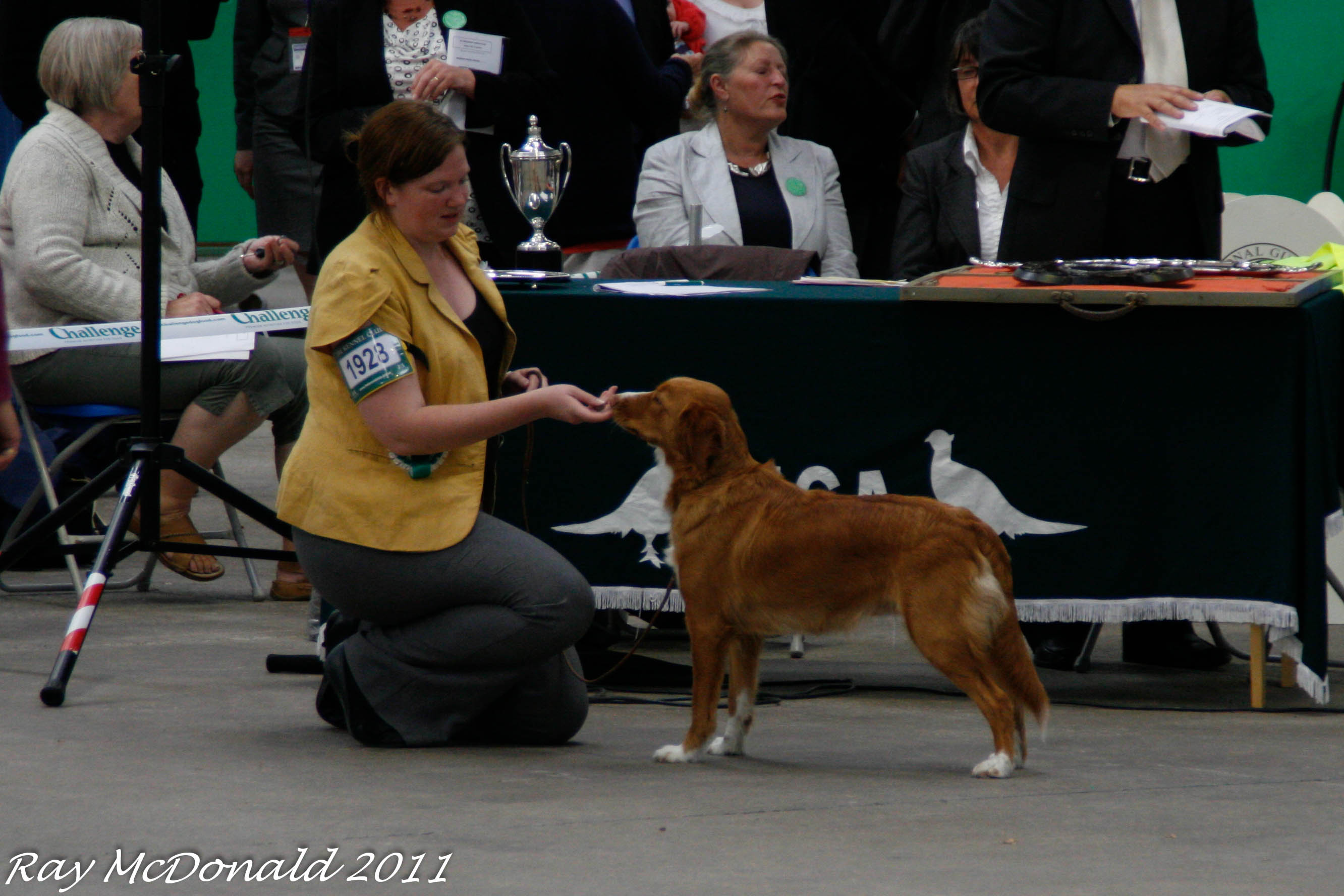
2)     The tail of the Nova Scotia Duck Tolling Retriever (Toller). Tollers are expected to hold their tails up when alert. Judges like to see the correct tail carriage when the dogs trot in the ring. By watching this lad in the ring we were able to notice he ran with his tail up, if he was allowed to run out in front slightly. Giving him that extra length of lead and changing the position of the lead has led to a dog that goes round the ring with a lovely tail carriage! (Of course, when he see’s something like ducks, his tail always goes up, but it wasn’t feasible to take ducks to a dog show!)