Some light hearted fun…..
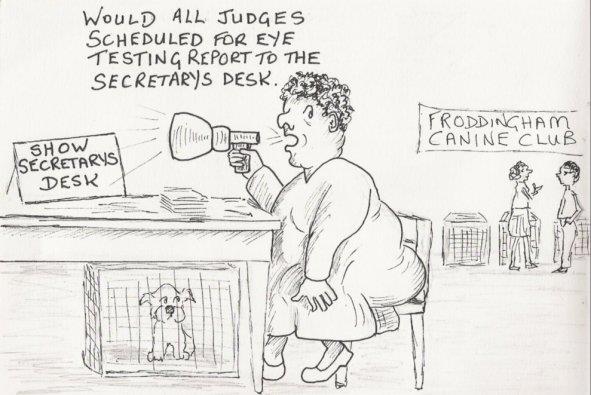
Some light hearted fun…..
Top Tip #11
Don’t let your dog get into a habit of pacing out on walks. Try to get them into a correct trot as much as possible when lead walking.
Allowing them to pace all the time will build up the wrong muscles and could make them more likely to pace in the ring.
Top Tip #10
Companion shows are a great place to get practice for new puppies before their first show, or for dogs that may need to gain confidence. The large class sizes, lots of dogs in all shapes and sizes and a relaxed atmosphere can do wonders.
They are also great days out for chatting to local dog friends, especially if you go to Ringcraft in the area!
The Three Turns
There are three turns that can be used in handling classes to ensure that you never get between the dog and the judge. When showing your dog in the breed ring, these are less important.
The Inward Turn
The dog and handler both turn on the spot, inwards towards each other and the lead is passed to the other hand. This is typically used at the top of an ‘up & down’ when the judge has moved to the left to view the profile movement of the dog. It is also used in the ‘T’ and ‘L’.
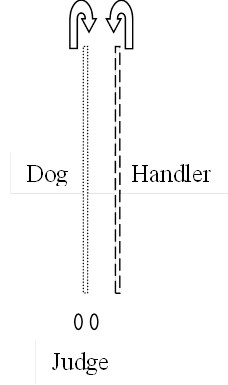
The Show Turn
The dog is slowed and turned on the spot as the handler moves round the outside of the dog. This is used at the top of an ‘up & down’ when the judge has moved to the right to view the profile movement of the dog and is the easiest turn to do if the judge stays in position.
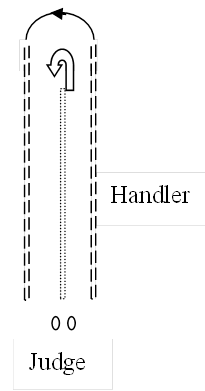
The About Turn (In front of the judge)
This time the handler slows and walks backwards around the dog turning the dog on the spot. This is used at the when turning in front of the judge when joining two patterns together. E.g. between a Triangle and an ‘up & down’.
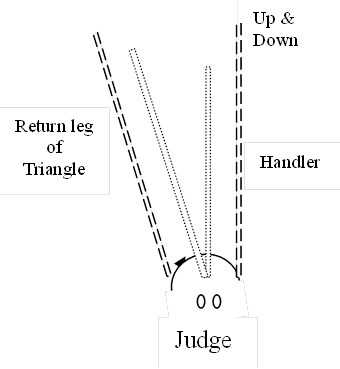
Top Tip #9
Always keep training fun.
Training must be fun for both you and your dog to get the most out of it.Do this by playing games with your dog in training as a great reward.
If you are not in the right frame of mind for training in a happy, positive way then miss out the training and wait until you feel better.
Happy training!
Judging – when and where to start
I want to try and explain how you start judging after you have decided that is the next step you want to take in your hobby.
Firstly, a general rule I have learnt from seminars and have agreed with based on my own experience is to have at least been showing for 5 years. This way you will have ring/show experience as an exhibitor and maybe done some stewarding along side an experienced steward.
Next is the seminars. None are required before you start judging, although I would recommend to anyone that they try to complete them before judging. There are three Kennel Club seminars and then Breed Clubs run breed specific seminars.
The Kennel Club Rules and Regulations
The Kennel Club Conformation and Movement
The Kennel Club Hands on Assessment
Breed specific seminar (Run by the breed clubs, go on one for your breed of interest)
Once you have completed these, you will have (hopefully) have learn’t all the general basics/theories of judging.
For Young Kennel Club (YKC) members age 16-25 I can personally recommend the YKC Judging Workshops. I attended the first one and it was fantastic, I can’t recommend them enough.
Another good start for judging is to judge either Companion shows and/or Matches. Starting at lower levels gives you the chance to be in the ring and make decisions where the atmosphere is more relaxed.
Please note; one thing that really gets to a lot of show Secretary’s is judges who push themselves by asking for/begging for appointments. If you have done the seminars and are polite to people, you will soon find the judging appointments flying in. There is never an excuse to ask for them (In my opinion).
Teaching your dog to stand – the basics
Click the link above to view this video. It is great for those who want to know how to get their dog to stand. This shows how you would go from the very start, just teaching the dog to stand and stand still.
Don’t forget to check out previous Blogs
Standing your Dog Part 1
Standing you Dog Part 2
Top Tip #8
Have confidence in yourself and your abilities. Your feelings and emotions will go down the lead to your dog.
To speak or not to speak
All dogs are different and therefor how you handle your dog can make a big difference to its performance in the ring. How much should you talk to your dog?
Human nature is to speak and talk (sometimes too much!) However this is not the same way that dogs communicate. This is an important thing to remember when training and handling your dog.
Some people enjoy talking to their dogs constantly. I think mainly because it gives the handler confidence, but it also could keep the dogs interest on them. However, some dogs will get over excited by this and are better when the handler is in silence, or using just the odd command to enforce the wanted behaviour.
A classic example is when moving the dog where talking can either help gee up a lazy dog, or could over-excite an over exuberant dog, so choosing to speak, or not to speak can be a very important decision and can hugely affect your dog’s performance. Think carefully about how much you want to talk to your dog and what works best for your dog.
If you feel you need help to work out how to get the best out of your dog, seek help from experienced show friends/judges or from a Ringcraft trainer.
Top Tip #7
Always congratulate those who win. Even if you don’t agree with the placings, a polite well done is all that is needed.
There is never an excuse for muttering negative comments for other exhibitors/judges to hear.